What is Gamelan?
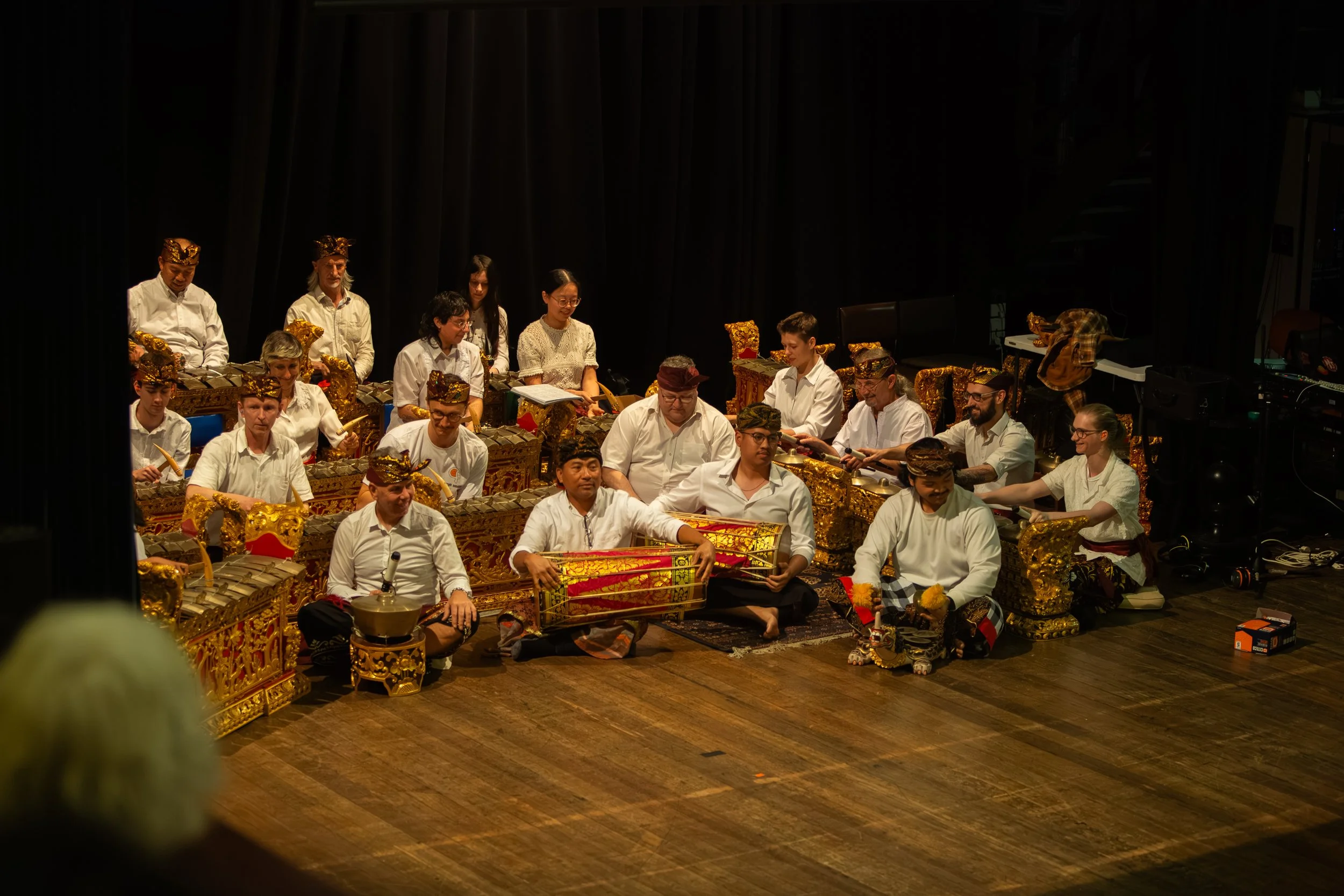
Gamelan is the term used to describe music found in Bali, Java and other parts of South East Asia. Derived from the Javanese word ‘gamel’, meaning ‘to handle’ (as in a tool or hammer) it is not surprising that the majority of Gamelan instruments are percussion, although the word has come to mean an ensemble even if no hammering is heard. The word is analogous with the term “orchestra” referring to a genre of music, and the set of instruments, rather than the people who perform on them.
There are dozens of distinctly different Gamelan varieties active in thousands of groups across the relatively small island of Bali, with origins ranging from grand Palace courts and Temple ceremonies, to humble Village feasts and Folk music.
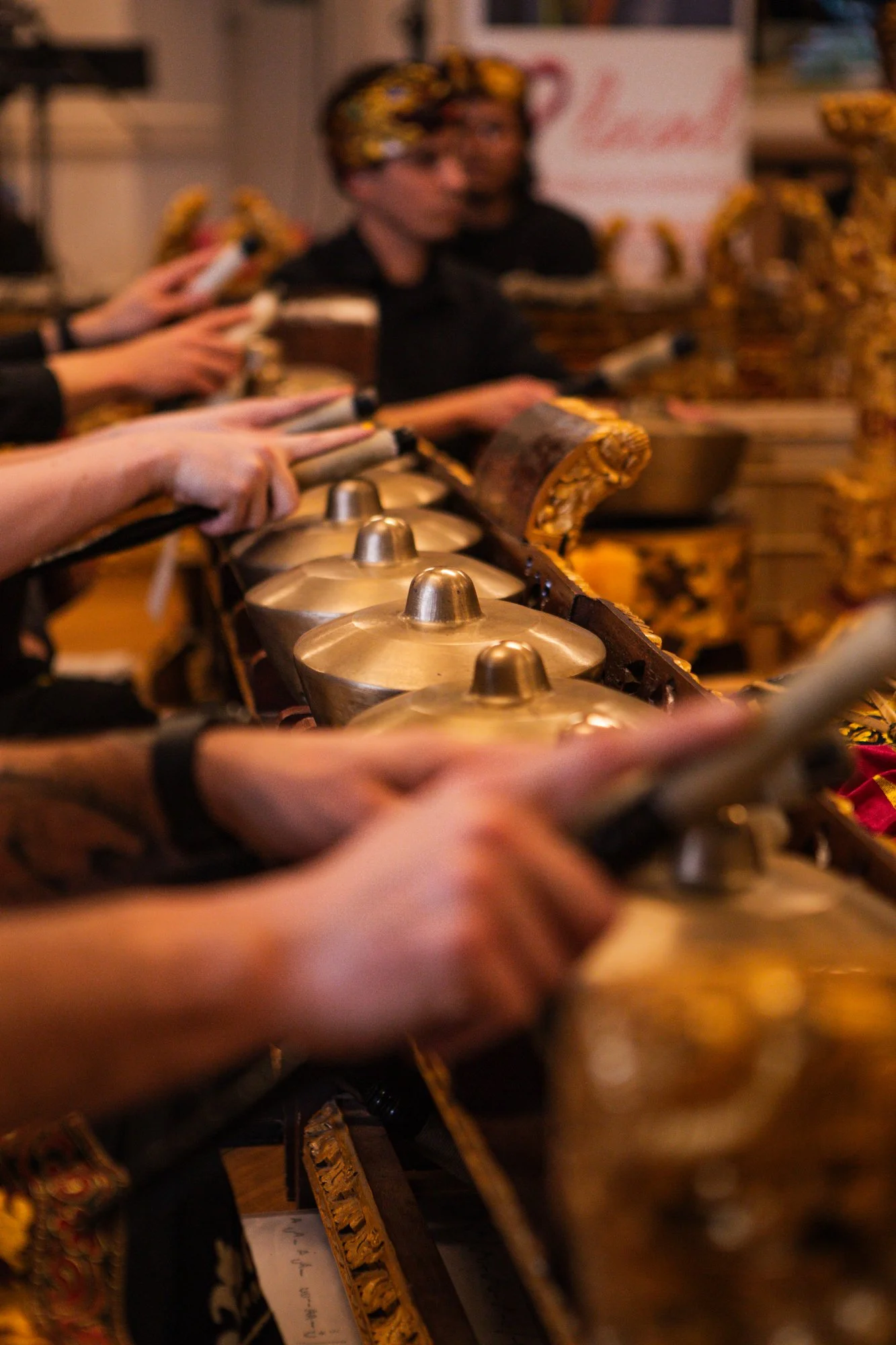
The ensembles usually consist of gongs, metallophones, cymbals, drums and flutes, made mostly from bronze and bamboo, but wood and iron instruments are also common.
Gamelan DanAnda is devoted to exploring and performing Balinese musical styles ranging from duos to 30-piece ensembles, in order to bring the fascinating sights and sounds to life for Australian audiences to enjoy up close.
A preview of our gamelan community orchestra featuring Balinese visiting artists performing at Fed Square for Nongkrong Festival 2025
Our Ensemble #1
Gong Kebyar
The 20th Century grand orchestra of Bali, 15-30 musicians perform modern works and vintage musical styles, instrumentally or with dance.
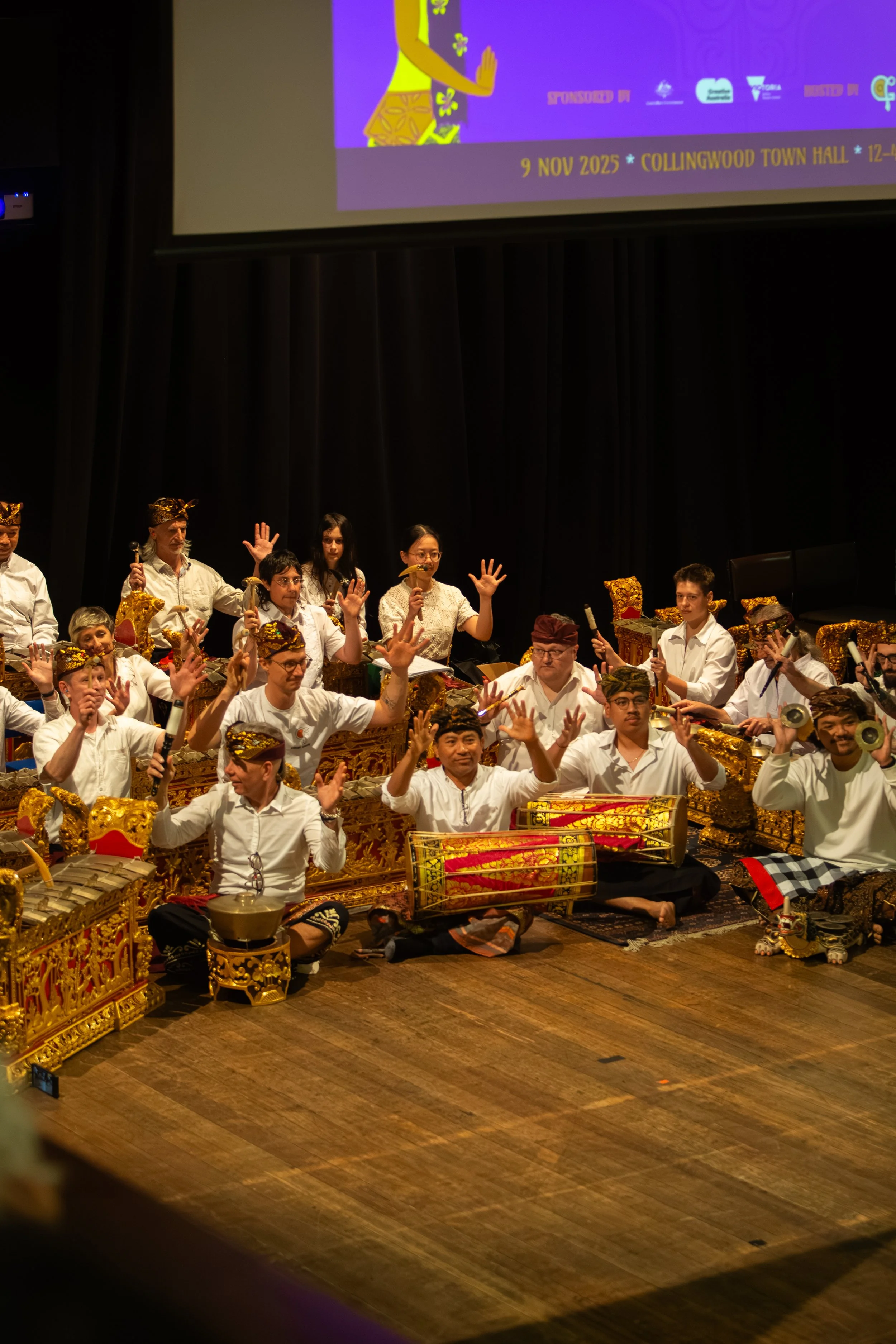
Photo: Gamelan DanAnda gong kebyar ensemble at the Gathering of the Gamelans 2025. Photo Credit: Adelista Widjaya
With rapid-fire shimmering bronze and sudden changes of tempo, Gong Kebyar is the ubiquitous Balinese orchestra, performing instrumental masterpieces and accompanying spectacular choreography. The repertoire of Kebyar draws on classic compositions of its Court and Temple predecessors but is also a popular vehicle for new creations.
The genius of Balinese Gamelan is that it requires cooperation to succeed, truly a community activity. Each melody or rhythm is broken up and shared between players for greater speed, clarity, and reliability. You are never alone playing in a Gamelan.
Gamelan DanAnda uses Gong Kebyar as an educational ensemble, performing regularly for the public and welcoming new members to Join the Group. There are parts in every tune suitable for a first time player and up to 15 levels of difficulty to master. Players are encouraged to change instruments over time to keep a balance of challenge and familiarity.
School groups are invited to visit and play Gong Kebyar, with room for up to 24 students. Session lengths and outcomes are dependent on group size and age, please Contact us to design a program for your needs.
Our Ensemble #2
Rindik
The relaxing sound of bubbling Bamboo Xylophones with ethereal Flute, this trio has the perfect atmospheric energy for smaller venues, indoor and out.
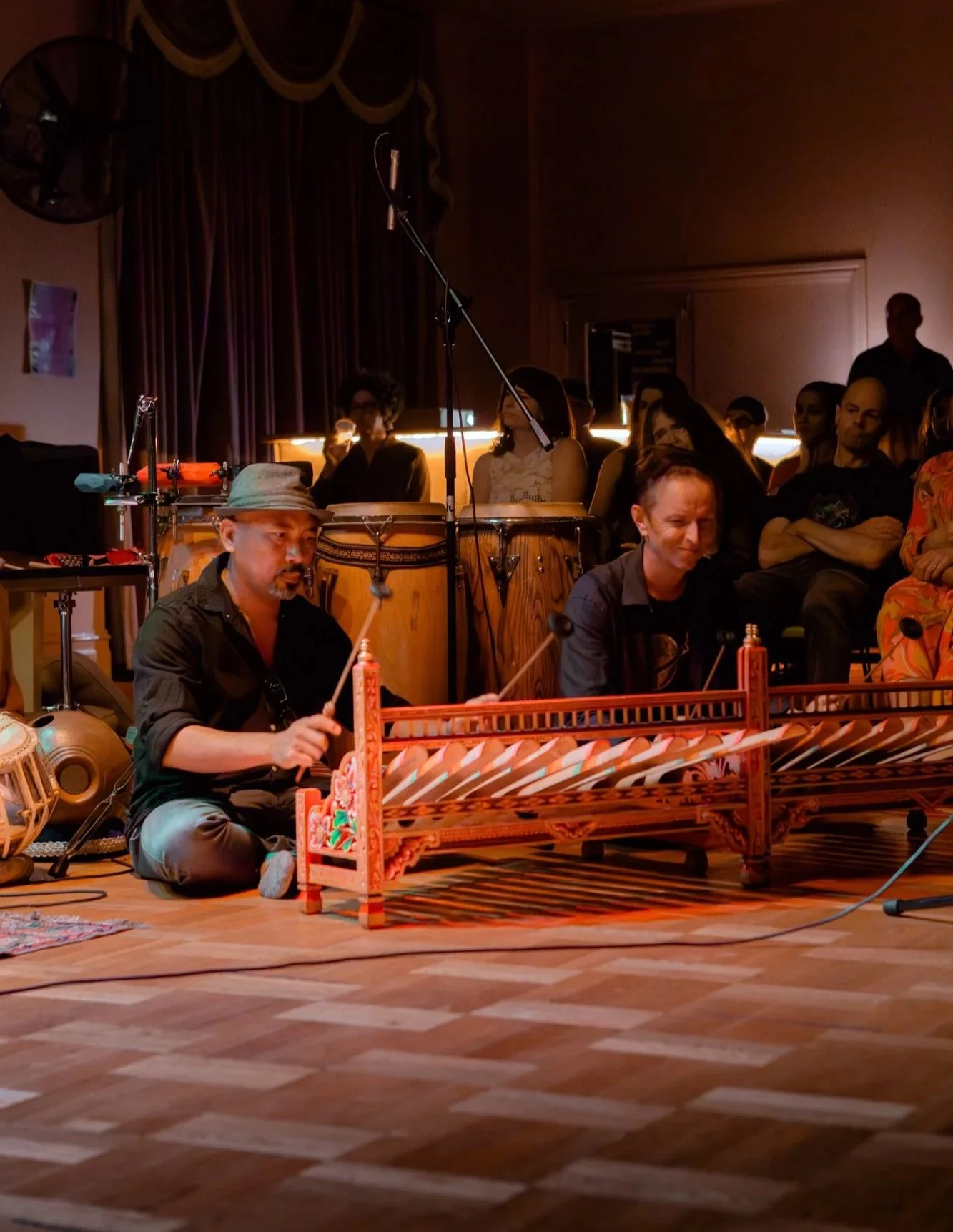
Photo: Ketut Sutena Adiputra (left) and Jeremy Dullard (right) playing rindik for GDA x Firetail at the Brunswick Music Festival 2025. Photo Credit: Adelista Widjaya
Gamelan Rindik, also known as Tingklik, is a style popular throughout the island of Bali. The instruments are portable and inexpensive which enables Balinese households to own one or two for casual entertainment. Often heard by visitors to Bali in cafes or at a beach resort, the relaxing folk-song repertoire is the essence of tranquility.
However, Rindik is also famous for its intensely coordinated up-tempo overtures. This energetic sound is the one employed when accompanying the hugely popular crowd-pleasing “Joged” dance, in which a female performer challenges on-lookers to impress her with their best dance moves.
While the playing technique of Rindik is very easy to begin with, the advanced repertoire requires a level of precision which is a sight and sound to behold!
Our Ensemble #3
Baleganjur
Powerful processional ensemble featuring a team of interlocking cymbals and drums, perfect for parades or for making a bold entrance.
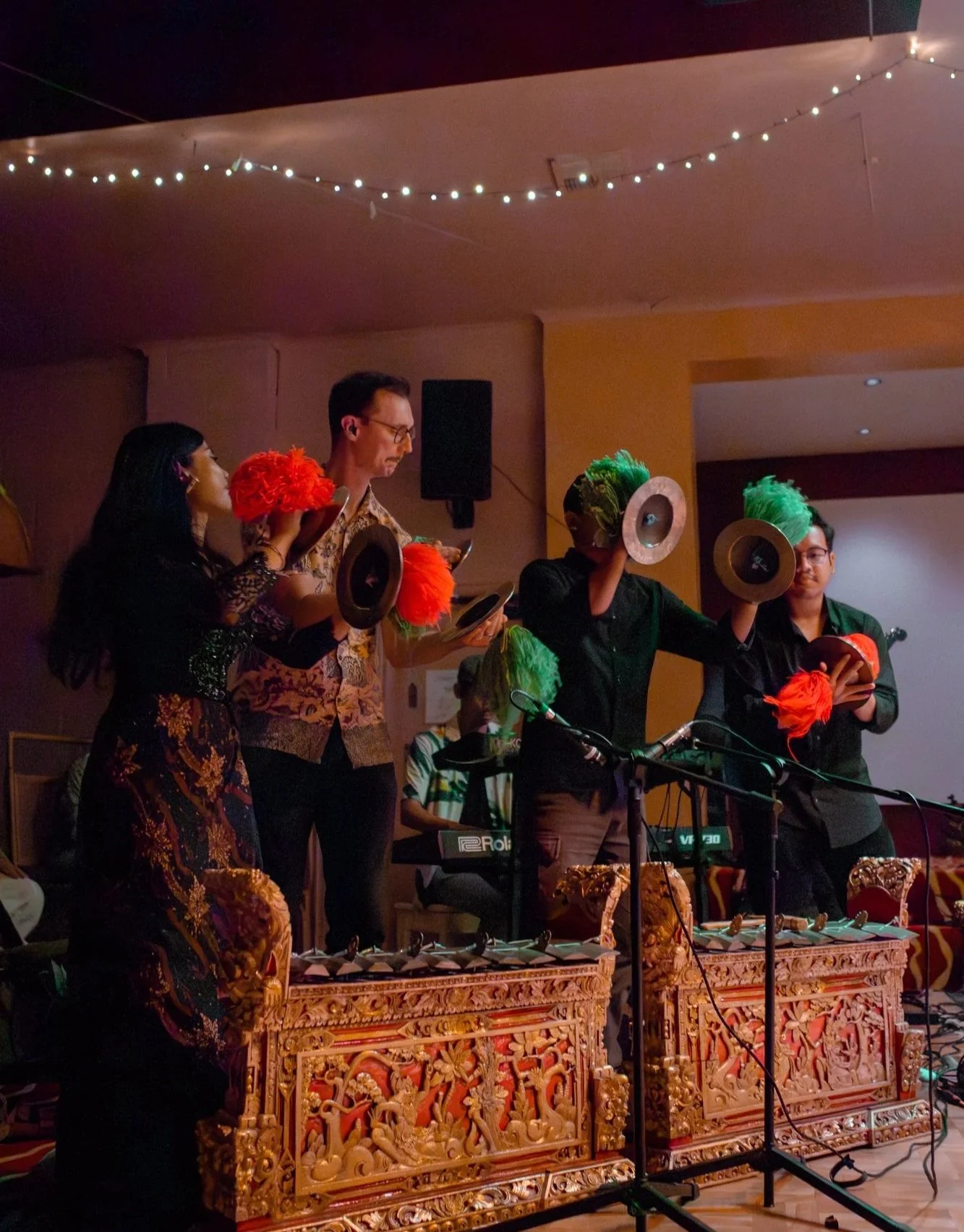
Photo: (Left to right) Putu Ayu Lestari, John Cheong-Holdaway, Yande King’s, and I Dewa Gde Gandiva Wisanjaka at the Brunswick Music Festival 2025. Photo Credit: Adelista Widjaya
Baleganjur music is an inseparable part of life and death in Bali, heard in every village across the island. Its traditional purpose is to accompany funeral processions, so this intensely rhythmic yet dignified ensemble has a permanent role in Balinese society. Due to its portability Baleganjur is now a fixture of all celebratory processions, most notably on the eve of Nyepi. This Balinese annual day of rest, which precedes their new Year, is juxtaposed by a day-long jamboree of raucous Baleganjur troupes, each sporting their own Ogoh-Ogoh, a giant papier-mache statue of a Demon, Hero or Deity.
Although the traditional structure of this music is quite fixed and formulaic, there has been a recent burst of creativity encouraged by the conservatories and with the advent of competitive Baleganjur festivals. This new wave of enthusiastic development has seen the once stoic ensemble expanded with astounding choreography and cross-genre collaboration. A standard Baleganjur ensemble consists of about 20 musicians, plus helpers to carry gongs, but these days in Bali bigger is better. When attending a modern festival parade it is not unusual to witness groups of more than 100 musicians, with dozens of drummers and an enormous battery of cymbal players.
Gamelan DanAnda presents Baleganjur ensembles of varying sizes in Community Processions, as Roving Entertainment, and recently acted as entourage for a bride and groom entering their Wedding Reception!
Our Ensemble #4
Gender Wayang
The smallest bronze Gamelan, 2 or 4 musicians create the soundtrack to Wayang, the shadow puppet theatre which is alive and well throughout Bali.
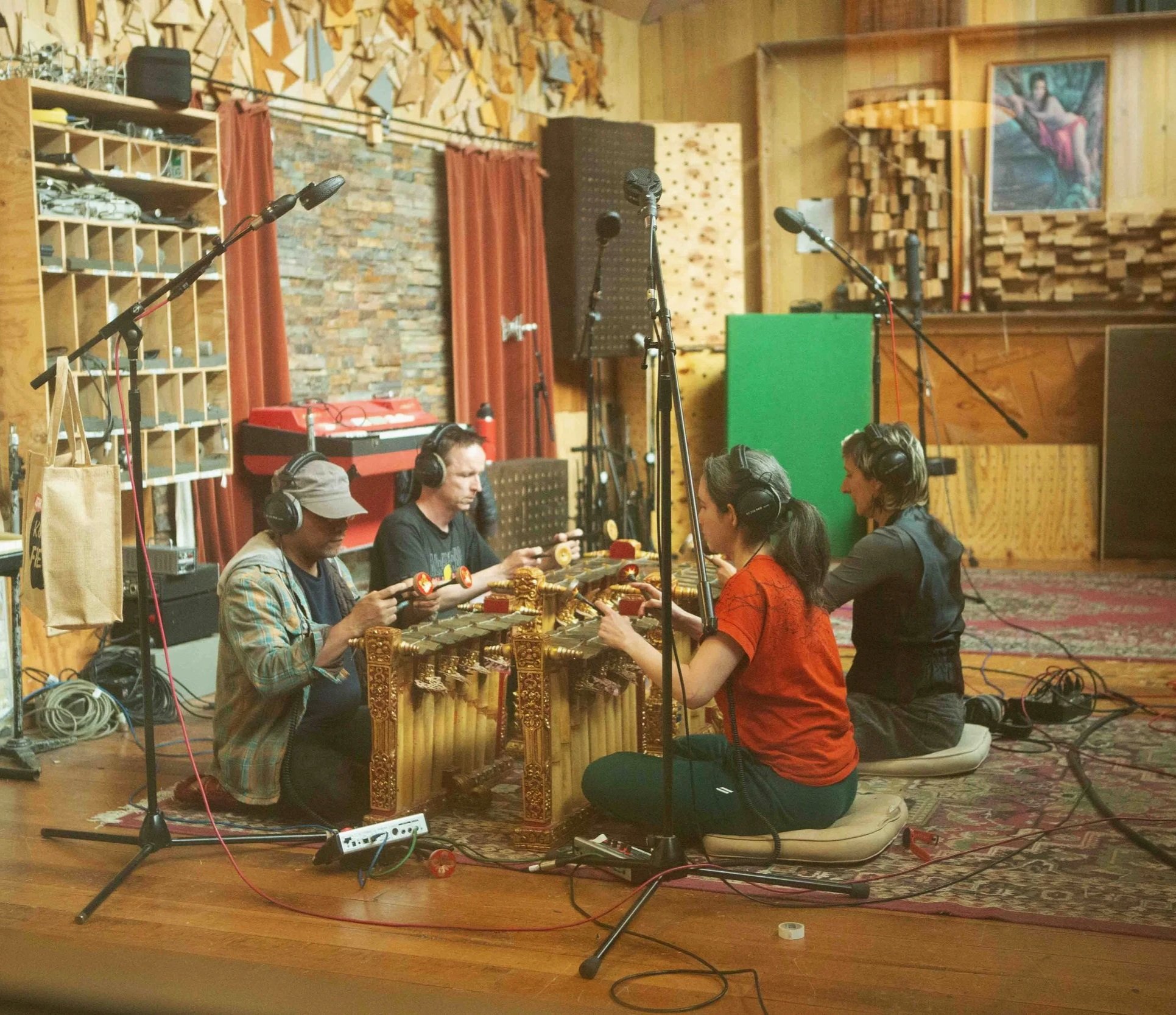
Photo: (Left to Right) Ketut Sutena Adiputra, Jeremy Dullard, Natalia Gould, and Sophie Covey-Crump recording Ready New Gang’s album debut. Photo Credit: Adelista Widjaya
A compact Balinese Gamelan, Gender Wayang is extremely portable and dynamic, able to evoke a range of moods as required by the Puppeteer. As puppet shows are considered an offering to the Gods as well as human entertainment, the music of Gender Wayang evokes a spiritual atmosphere and is employed for various religious events, including the tooth-filing ceremony which marks adulthood in the Bali-Hindu culture.
Lyrical melodic lines and interlocking decoration are produced by two (sometimes four) musicians using a special double-handed hammering technique. The repertoire includes slow, drifting tunes as background to dialogue, fast, aggressive vamps for action scenes, and overtures of the most highly regarded complexity on the island.
Here in Melbourne our Gender Wayang ensembles have welcomed Indonesian deligates to conferences, entertained Wedding guests, and captivated onlookers who attempt to unravel the interwoven melodies.